The Middflow Project · Equity by Design
Concept stage · Build in developmentThe first one doesn’t exist yet. Let’s build it together.
Menstrual products can be available in a supply chain and still be out of reach when someone needs them. We’re developing a practical concept to make access more reliable and inviting people with the skills, materials, products, ideas ,advise ,opinions and resources to help us build and test it.
The concept
The Purple Flow Box is a proposed menstrual-product access point. Its design, materials, access mechanism and replenishment process still need to be assessed, developed and tested.
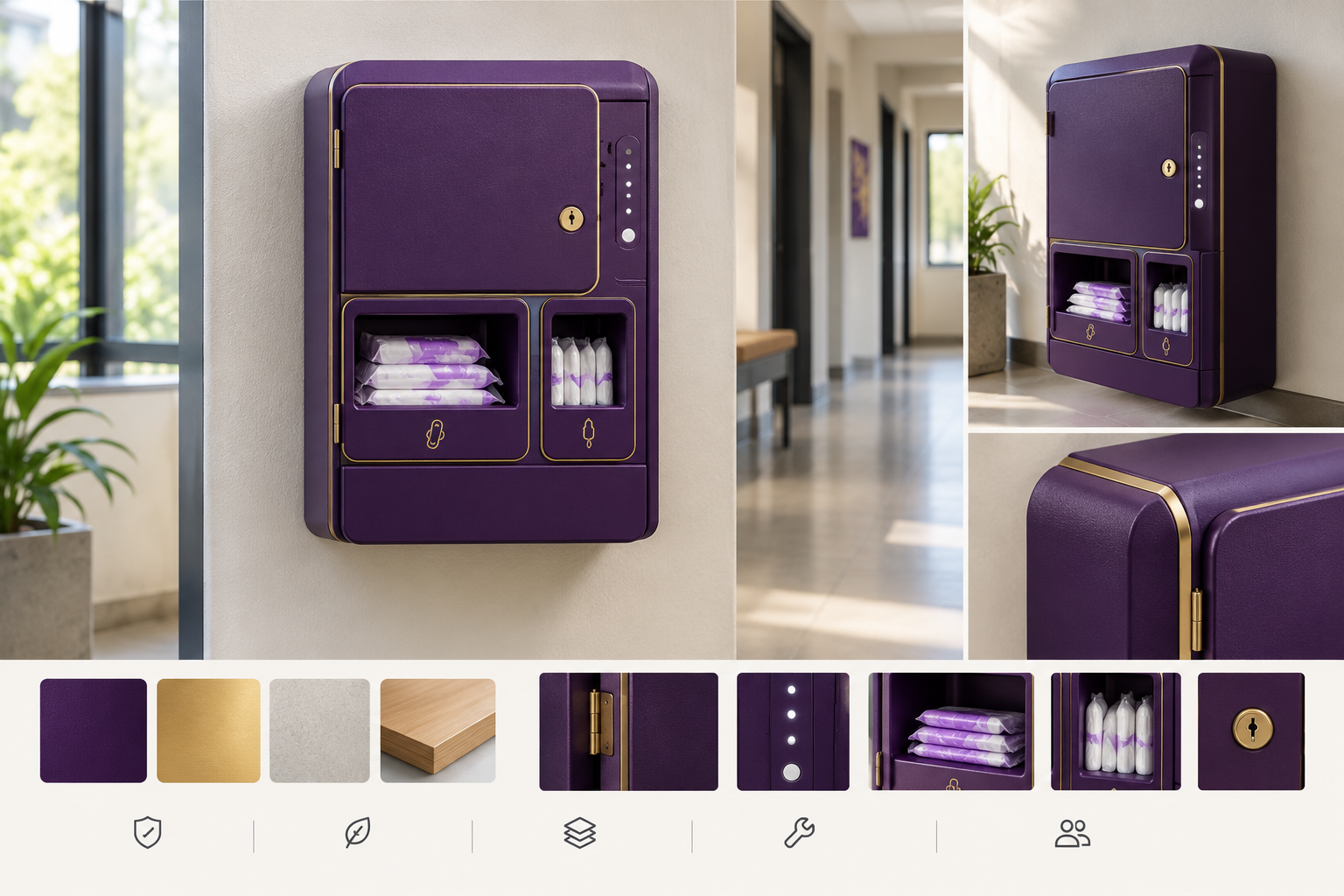
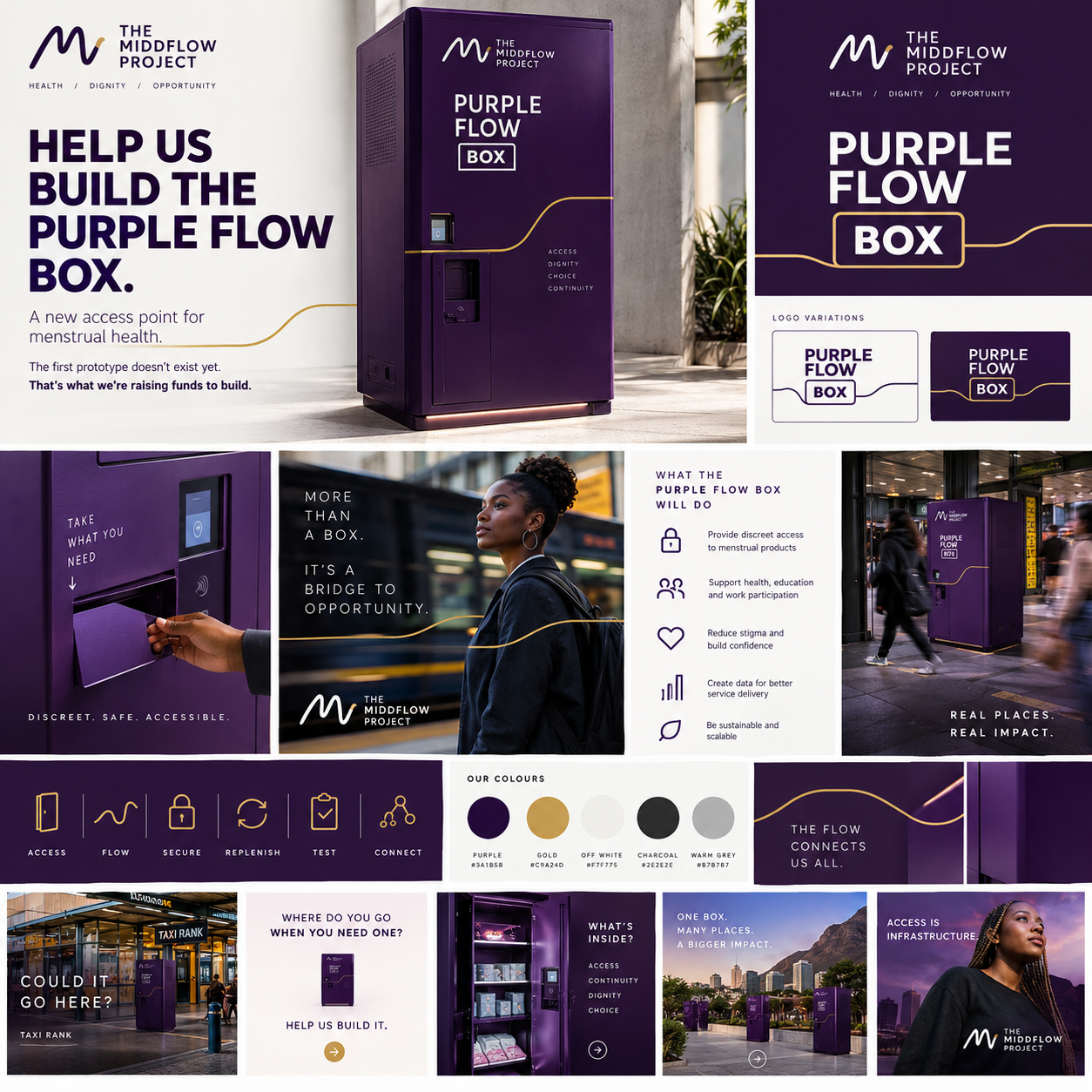
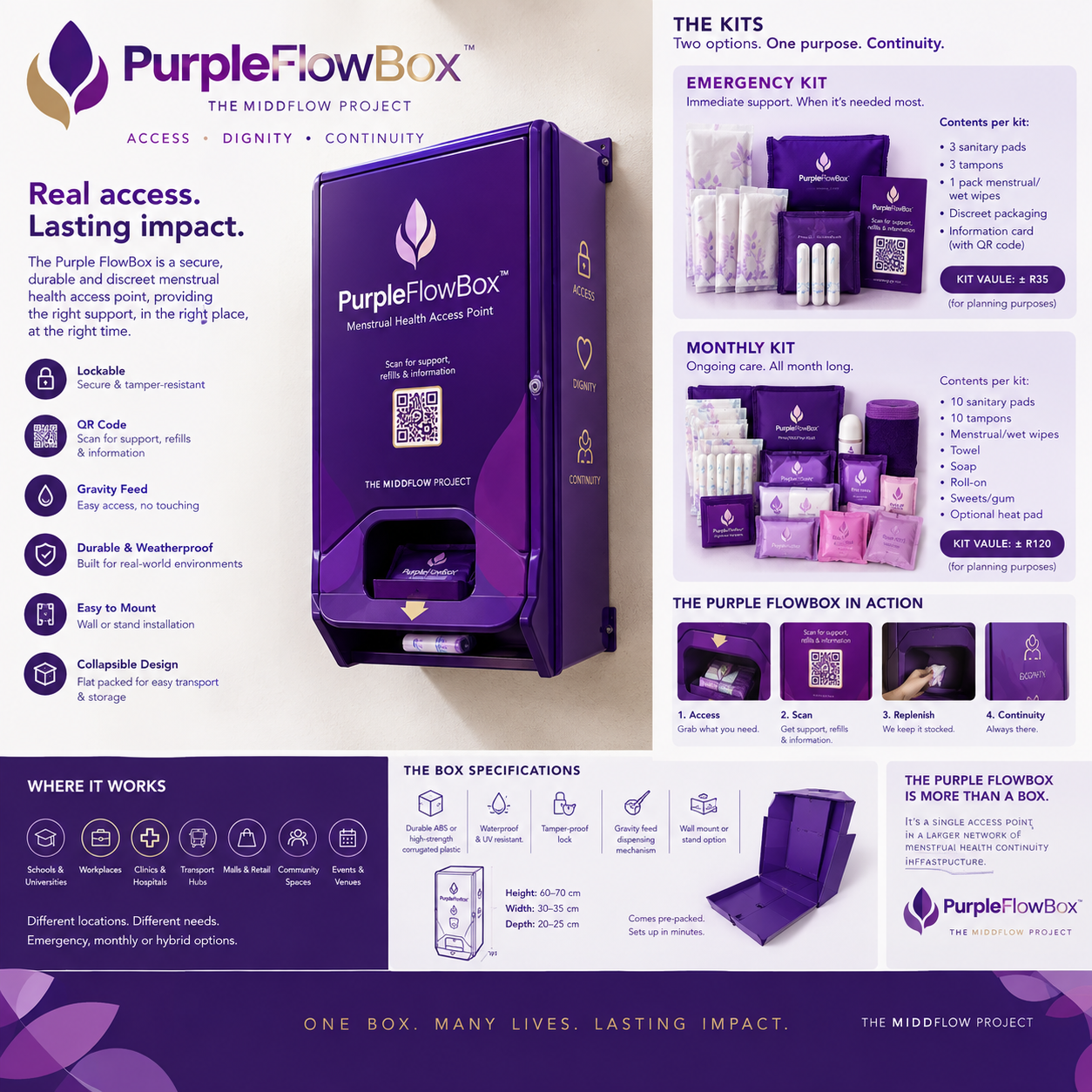
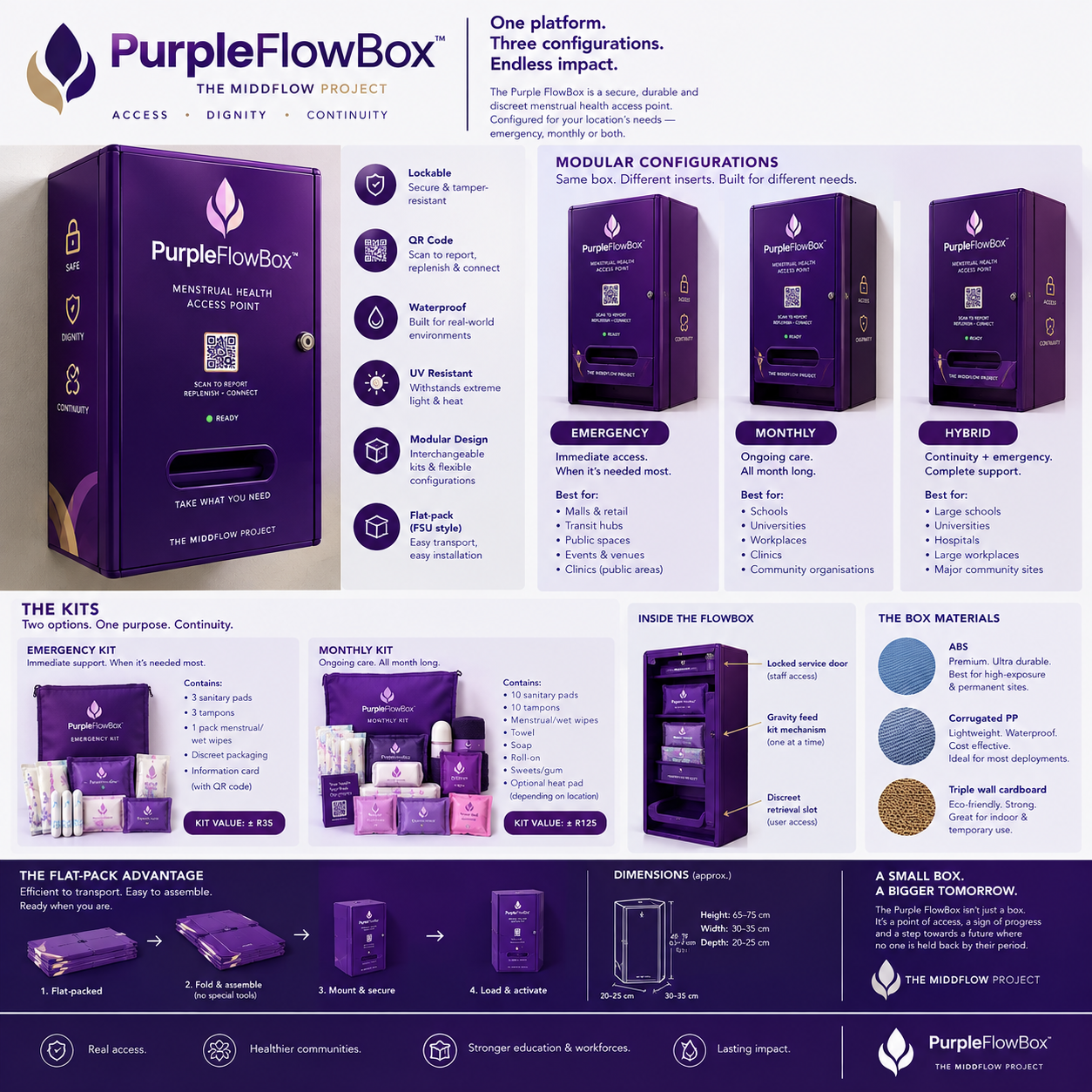
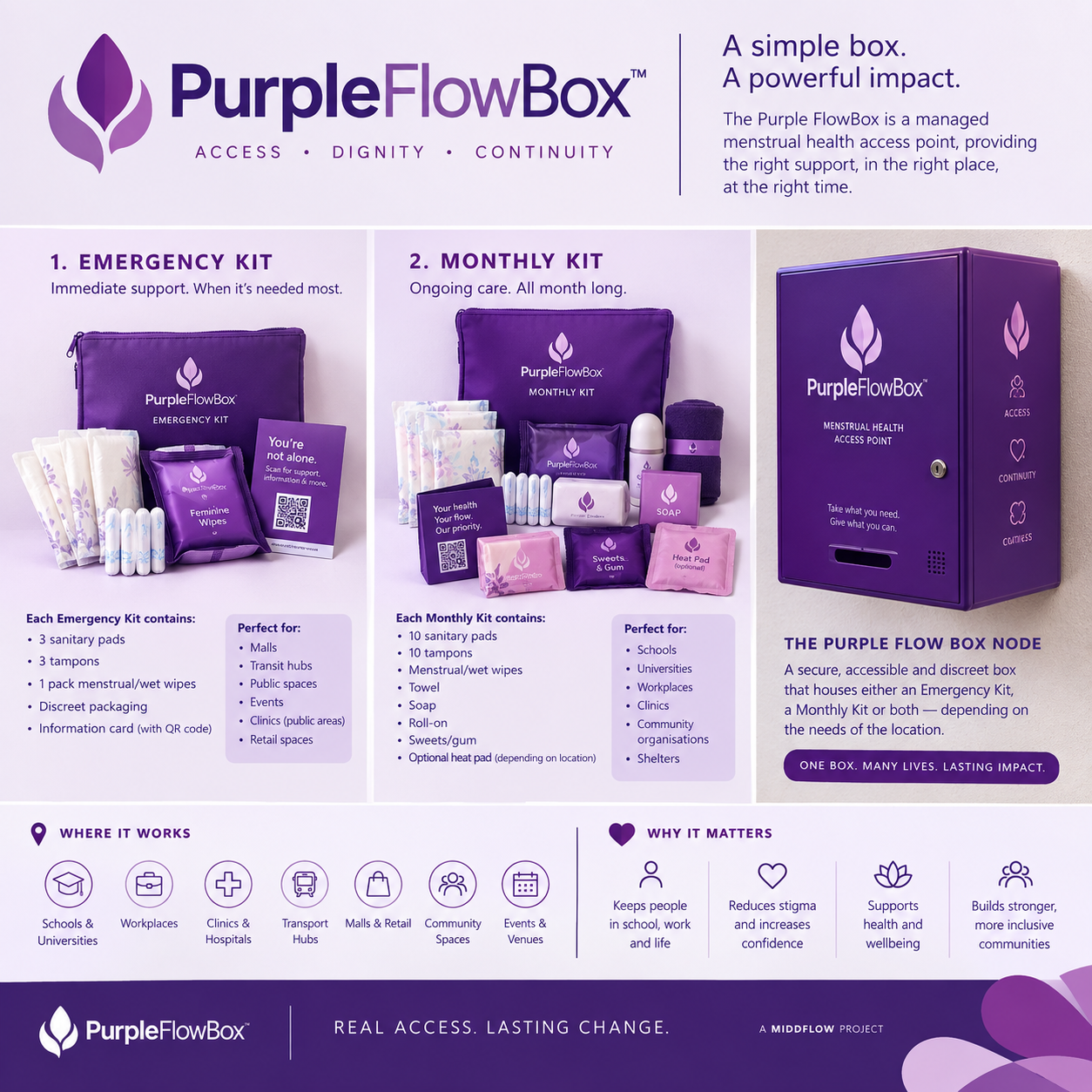
All visuals are concept references. They do not represent a completed prototype, a confirmed manufacturing partnership or a final approved design.
Why this build matters
A donation can be delivered. Products can arrive at a school, workplace, clinic or community facility. But what happens when those products run out?
Who notices? Who replenishes the stock? Can someone access what they need without unnecessary barriers? What happens when the person responsible is unavailable?
Menstrual health is recurring. Access needs to work repeatedly and not only on the day a donation arrives.
The question is not only how products reach a place, but how they remain available, accessible and replenished over time.
The Purple Flow Box explores one part of this problem: the gap between products being supplied and people being able to access them when they need them.
It is not a claim that one device can solve period poverty. It is a practical concept to investigate within a broader menstrual-health access challenge.
The build challenge
Good product development starts by identifying what must be true not by pretending every decision has already been made.
The mechanism, access rules and replenishment model are not yet final.
We are not presenting the Purple Flow Box as a vending machine. It is a proposed practical access point for menstrual products. The final mechanism and operating model will be informed by design work and testing.
The design should respond to actual user needs, not prioritise novelty or aesthetics over usability.
Access should be discreet, understandable and respectful, without unnecessary barriers or stigma.
A unit is useful only if products remain available and the replenishment process works.
Materials, components and mechanisms must be considered in terms of durability, repair and real operating costs.
School, university,clinic, workplace and community settings may have different safety, privacy and operating requirements.
Testing should identify what works, what fails and what needs to change before wider deployment.
Build fund · Current mobilisation sprint
The immediate fundraising goal is to mobilise initial resources and relationships for the next stages of development. This 10 day sprint(27 October- 05 November)is the first step, not the full development budget.
Confirmed funds raised
How to read these figures
Cash raised refers to confirmed funds received. Pledges and in-kind offers are tracked separately and are not counted as cash received.
The longer-term R300,000 build ambition is provisional and subject to a costed, approved budget. It is not the current sprint target.
Progress figures are manually maintained. They will always be confirmed against the organisation’s records before publishing updates.
Different contributions. One build.
You do not have to fund the entire project or belong to a large organisation. A specific skill, material, introduction or technical question can help move a defined part of the build forward.
We are solving for X.
X is not “period poverty solved.” X is a practical, testable contribution to more reliable access built with the people, skills and resources needed to learn whether it works.
Contribute toward design, materials, fabrication, logistics, tech, testing or pilot preparation. Funds received will be reported separately from pledges and in-kind offers.
Help with industrial design, engineering, prototyping, assembly, mechanisms, durability or repairability.
Offer suitable materials, components, fasteners, locks, tools, packaging or fabrication capacity.
Discuss menstrual-product supply for design consideration and, where appropriate, controlled testing.
Explore whether a school, clinic, workplace or community facility could be a suitable test environment, subject to readiness and safeguards.
Introduce an expert, funder or maker or flag an assumption, risk or user need we should address before building.
Where we are · Where we are going
The current sprint is designed to mobilise initial resources and relationships. It is not the full development budget or a promise that the prototype will be complete by a fundraising deadline.
Current sprint: has three milestones, starting with R30,000.
Milestone 1 is R30,000. Milestones 2 and 3 remain to be confirmed as the sprint progresses. No completion date is attached to these milestones yet.
The provisional R300,000 longer-term build ambition is subject to validation against an approved, costed budget. Cash, pledges and in-kind support should be tracked separately.
Raise initial build fund, confirm the need, recruit practical contributors and prepare a clear record of offers and spending.
Specify users, site conditions, access, storage, replenishment, safety, maintainability and what the first test must establish.
Compare feasible options, get technical input and supplier quotes, select a proportionate design and approve a costed build budget.
Build only when the design, materials, resources and safeguards are sufficiently clear.
Assess usability, durability, replenishment, stock protection, maintenance and real costs. Improve, retest, pilot or stop based on evidence.
Transparency is part of the build
We intend to document the process from concept through design, fabrication and testing. That includes what is working, what is delayed, what has changed and what still needs support.
We will distinguish money received, pledges, confirmed in-kind contributions and items still being discussed. We will not describe an expression of interest as a partnership or imply that an unbuilt prototype is already delivering outcomes.
Publish only verified figures and confirmed commitments. Fundraising targets will be checked against the current working build budget before being presented as final.
A few terms worth knowing
Water, Sanitation and Hygiene. Menstrual health is affected by whether people have safe toilets, water, privacy and suitable facilities to manage their periods.
Sexual and Reproductive Health and Rights. This frames menstrual health as part of health, information, bodily autonomy and access to services not only product distribution.
The final practical steps between a product being supplied and a person being able to obtain it when and where it is needed.
A one-off delivery can help today.
Reliable access also depends on what happens when stock runs low tomorrow.
Frequently asked questions
No. It is a concept in development. The design, materials, access mechanism and operating model still need to be assessed and tested.
Menstrual products already exist in supply chains, yet access still breaks down at the last step—the moment someone actually needs them. We want to test whether a different kind of access point, not another donation drive, can close that gap. There is no perfect time to start testing an idea like this; we would rather learn from an honest first attempt than keep planning indefinitely.
We are not presenting it as a conventional vending machine. The intended concept is a practical access point for menstrual products. The final mechanism and any access rules will be determined through design and testing.
No. Menstrual-health access is affected by supply, affordability, sanitation, information, safety and other conditions. The Purple Flow Box is one concept to investigate within a broader approach to reliable access.
If it works, the practical difference is simple: someone does not have to miss school or work, or go without, because a product was unavailable on the day they needed it. We are not claiming this fixes period poverty on its own. The concept is aimed specifically at keeping access reliable between donations, not just during them.
Yes. Relevant expertise, materials, fabrication, products, testing capacity, transport, introductions and constructive technical feedback may all be useful. We will clarify the need and agree the contribution before treating it as confirmed.
The Middflow Project intends to distinguish cash received, pledges and in-kind contributions, and report progress and expenditure using verified information. Donor recognition will be handled with consent and in line with applicable requirements.
We are looking for a mix of settings—schools, clinics, workplaces and public spaces—because each has a different pattern of use and different access barriers. A site also needs to be ready: a willing host, basic safety and supervision considerations met, and a realistic way to keep the unit maintained. We would rather test in a few well-chosen places than rush into many.
The intention is continuous access, not a short pop-up. That is the purpose of exploring a replenishment model. However, how long a specific test site keeps a unit depends on what the pilot shows and what funding and support are confirmed. We will be upfront if a test site’s access period is ending or changing, rather than letting it quietly disappear.
That is one of the main things this test is designed to find out, not something we are assuming in advance. Sustainability depends on who refills the unit, how often, at what cost, and whether a host site can keep the process going. We will report honestly on what holds up and what does not.
A date should be announced only once requirements, resources, design and fabrication plans are sufficiently established. Updates will explain progress and delays rather than promise an unvalidated date.
Individuals, community organisations, educators, menstrual-health practitioners, designers, manufacturers, fabricators, retailers, logistics providers, researchers and potential funders can propose a relevant contribution.
Use The Middflow Project’s donation page to review the available options.
Help us build the Purple Flow Box
If you can fund part of the work, help design or fabricate the unit, supply suitable materials, contribute products, offer a place to test or connect us to someone who can, we want to hear from you.
Tell us what you can contribute or what you think we need to consider.
The principle behind the project
We believe access should be considered at the design stage not added as an afterthought. That means asking who can use a solution, who might be excluded, what happens when it fails and what it takes to keep it working.
The Purple Flow Box is an opportunity to put those questions into practice, openly and with others.
The Middflow Project
Menstrual health access, designed for continuity.
General enquiries: hello@middflow.org.za
Partnerships: partnerships@middflow.org.za
WhatsApp: 060 601 7402
Social channels: X · Instagram · Facebook · TikTok
The Purple Flow Box is a proposed concept under development. Statements about future design, testing and impact describe intentions, not completed work or guaranteed outcomes. Section 18A receipts and any tax-deductibility should be confirmed directly with The Middflow Project against its current SARS approval and applicable requirements before a contribution is made.
